

The question most buyers forget: who does the setup?
Self-guided onboarding sounds like a feature and reads like one on a pricing page. What it means in practice is that you configure your own venue. Your rigs, your bays, your session lengths, your pricing tiers, your membership perks, your waiver text, typed in by the person who is also trying to open a business. The software is live on day one. Your venue is live whenever you finish.
The alternative is that it arrives built. That is the model here: the configuration is done for you and handed over working, on your own domain, under your own brand, with your real inventory in it. It is a different trade, and it is the one worth asking every vendor about before you compare anything else.
How the two models compare
| What to compare | Built for you | Self-guided setup |
|---|---|---|
| Who builds the venue configuration | We do. Rigs, bays, session lengths, pricing, memberships and waivers are configured for you. | You do. Self-guided onboarding hands you a login and a blank system. |
| State on day one | Live with your real inventory loaded and bookable. | Live once you have finished entering it. |
| Whose brand the customer sees | Yours, on your own domain. | Varies. Some platforms book on their domain, under their brand. |
| Who owns the customer relationship | You. The customer list is yours and stays yours. | Worth asking directly, in writing, before you sign. |
| Which sim titles you are allowed to run | Any of them. The operations layer does not touch the rig, so your title choice stays yours. | Where an on-sim launcher is included, it is often built for one title. |
Deliberately absent: a price row. Vendors change pricing often enough that any table here would be wrong within a month, and the number is rarely what decides this. For a vendor-by-vendor look at who actually does what, see the platform comparison.
Run by real venues
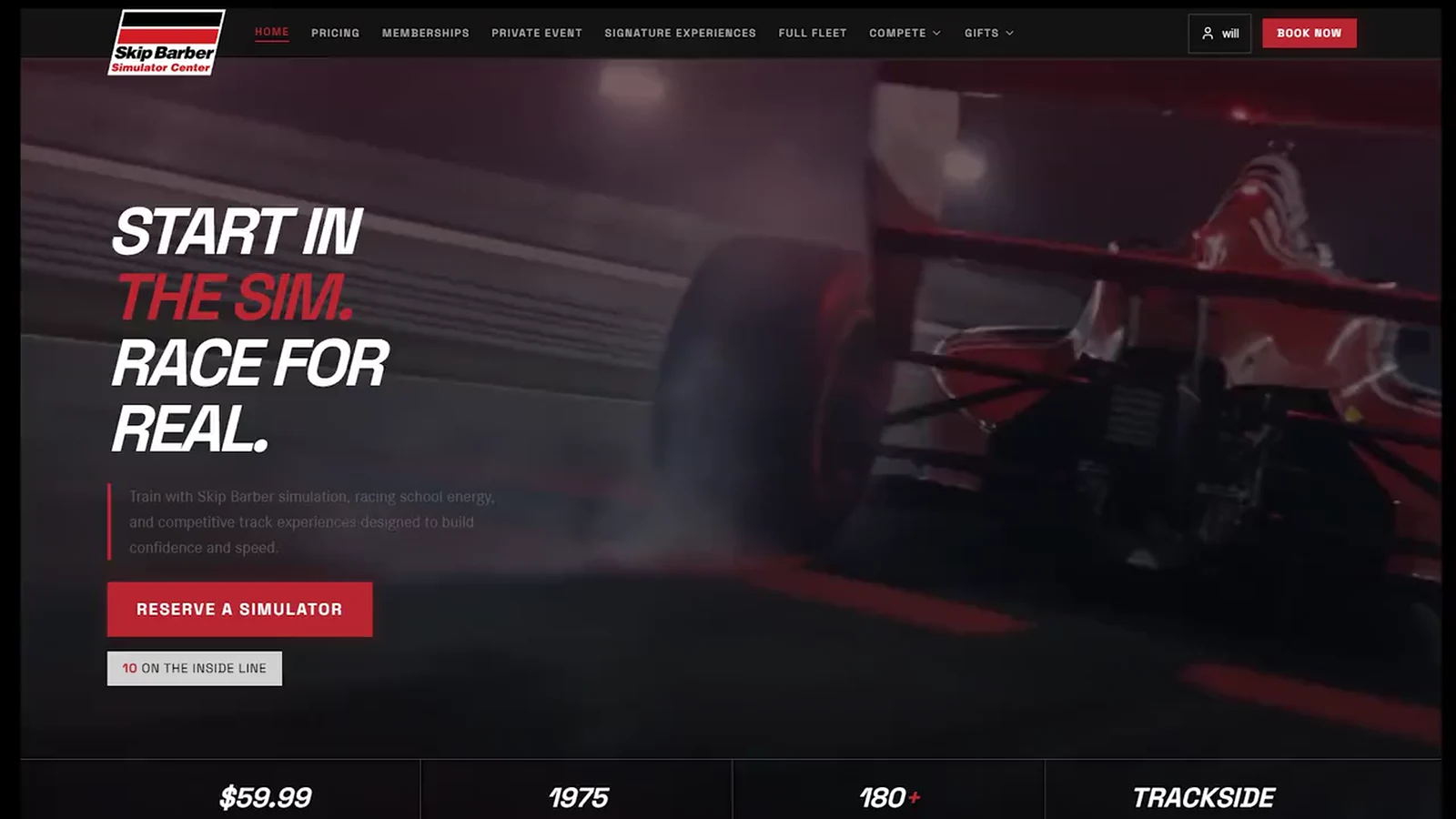
This is not a pitch deck. The Skip Barber Racing School runs its Long Island sim center on it. Speed Experience, a sim racing and track-day venue in Bavaria, runs its whole booking and events operation on it too. Real floors, one platform, each branded as their own.
Open the live builds and book a session yourselfThe Skip Barber model
You do not have to build software to open a sim venue. Skip Barber did not. They run their sim center on this platform, branded as theirs. You license the platform, we configure it for your venue, and you launch on software that live venues already proved out. What that looks like for your specific build is a short conversation, not a checkout page.
Common questions
Can I just use Calendly, Mindbody or Square Appointments?
You can take a reservation with them. What they do not model is a floor of rigs turning over in short sessions, walk-ins and reservations competing for the same seats, group bookings, waivers attached to a session, and a counter. Most venues start there and move once parties and memberships get real.
What actually separates sim racing venue software from tour and activity booking software?
Tour and activity platforms model a departure with a headcount. A sim venue is per-rig inventory with turnover, plus memberships, plus a retail counter, plus on-sim control. The booking half is the part that looks similar and the operations half is where the difference shows up.
Does every platform control the simulator itself?
No, and this is the biggest hidden difference in the category. Some products are booking and payments only. Others are race control and leaderboards with no booking or payments at all. This platform is the operations layer and does not run the simulator, which is deliberate: it means no launcher dictates which sim titles your venue can run. Where a launcher is included by another vendor, ask specifically which titles it supports, because support is usually narrower than the marketing implies.
Can customers get an instant quote for a private party or corporate event?
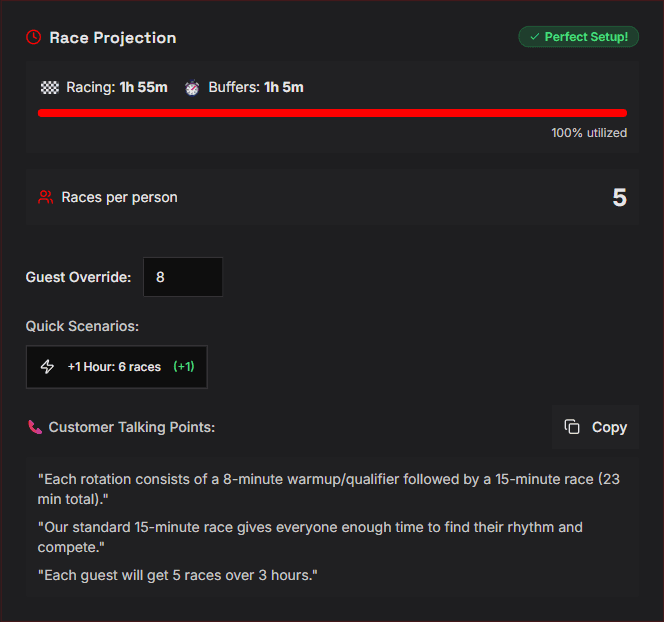
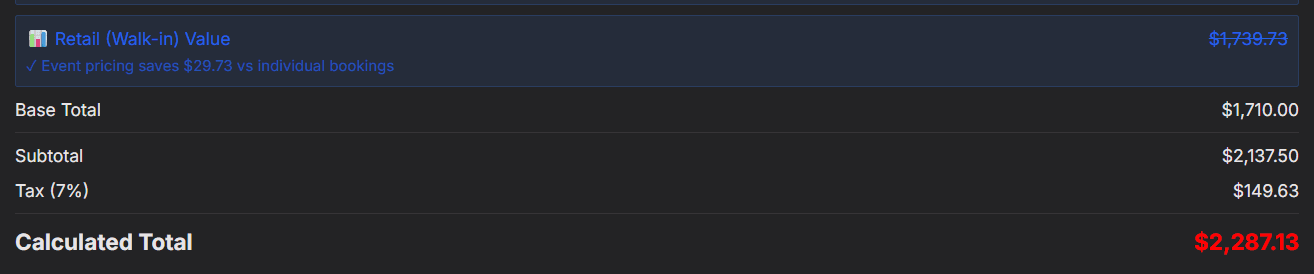
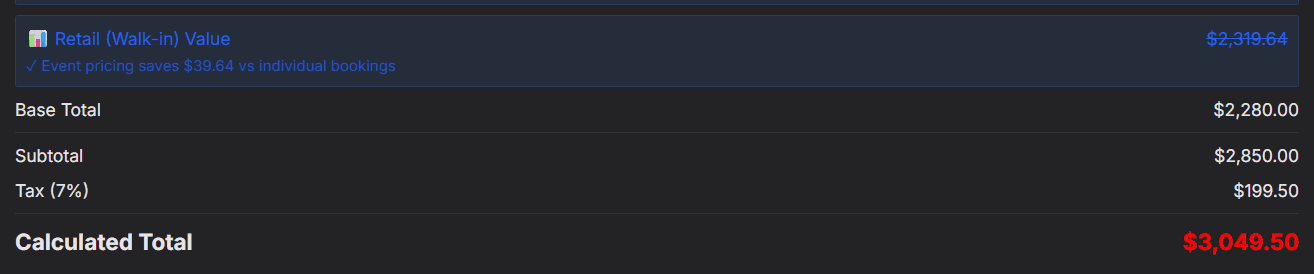
On this platform the enquiry returns a price while the group size and length are still being set, along with an honest estimate of how many races each guest gets at that size, which is the number that decides whether the party lands well. The fuller feasibility check sits with the operator in the quote builder, where it flags a configuration that leaves rigs idle, projects races per person, and drafts the talking points for the follow-up call. Worth asking every vendor whether their event flow returns a price or a promise to get back to you.
How much does it cost?
Setup is quoted per venue, because we build it for you rather than hand you a login. Ongoing pricing is based on the revenue the platform generates rather than a fixed monthly fee, so it scales with the venue instead of charging a quiet venue the same as a busy one.
How long does it take to go live?
It depends on the size of the build and how much of your existing setup carries over. That is a short conversation rather than a number on a page, and you can see finished examples running before you commit to anything.