
Wheels and pedals
This is where the money is best spent. The jump from a belt or gear-driven wheel to a direct-drive wheel is the single biggest upgrade a first-timer can feel, even if they have no idea what they are feeling. Direct drive puts the motor shaft straight on the wheel, so the forces are crisp and strong instead of vague and notchy. Consumer brands like Fanatec, Moza, and Simagic publish their specs and prices openly, and their commercial-tier wheels sit in a range any serious venue can plan around.
Pair the wheel with load-cell pedals. Instead of measuring how far you push, a load cell measures how hard, which is how a real brake works, and it is the other detail that makes a customer sit up. Cheap potentiometer pedals are the first thing regulars complain about, so do not save money there.
Motion vs static rigs
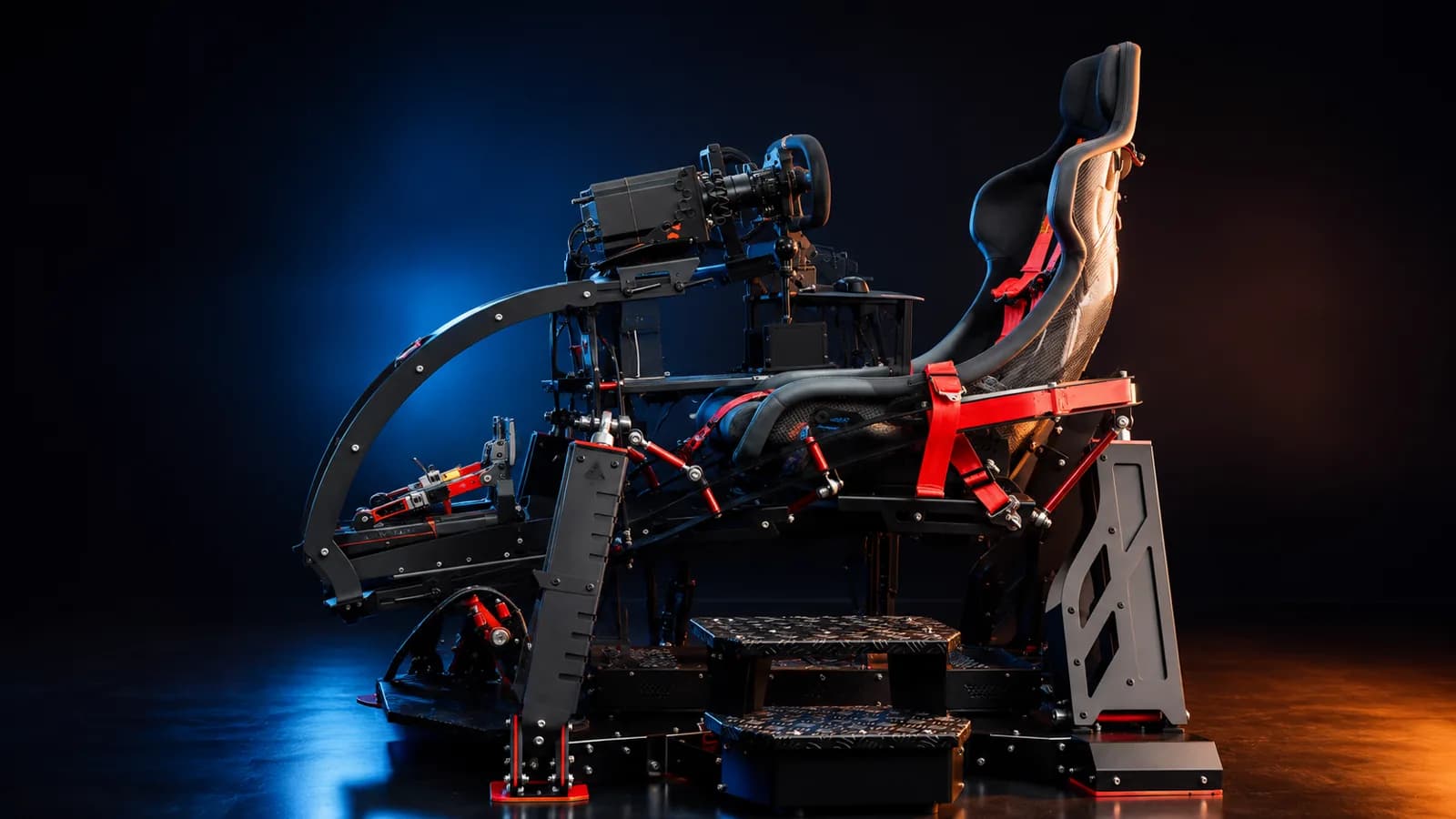
A static rig bolts the seat, wheel, and pedals to a fixed frame. A motion rig moves the whole seat with the car, so you feel the weight transfer under braking and the rear stepping out. For a venue, motion is the thing people film and tell their friends about. It also costs more and takes more floor space and setup, so most owners run a mix: a bank of strong static rigs for volume and a motion rig or two as the headline attraction.
On the motion side, Motion Systems builds the Qubic platforms and the TORQ direct-drive line, and their published model specs are on motionsystems.eu if you want to compare. Whichever brand you shortlist, judge a motion platform on travel, responsiveness, and how well it holds up to back-to-back sessions, not on the spec sheet alone.
Screens vs VR
Triple screens give a wide, shared view. Anyone walking past sees the action, the customer never touches their face, and there is no headset to clean or fit between sessions. The tradeoff is depth: screens do not wrap you inside the car the way a headset does.
VR is the bigger wow and the more demanding operation. The immersion sells itself the first time someone puts a headset on, but you take on hygiene between guests, fitting time, and a share of people who feel queasy. Plenty of venues run both and let the customer choose. Think about throughput on a busy night before you commit a whole floor to headsets.
What breaks under commercial use
Home gear gets used by one careful owner. Venue gear gets yanked, slammed, and leaned on by people who do not own it. Quick-release wheel hubs, shifter paddles, and pedal faces take the abuse first. Buy the sturdier version of anything a hand touches, keep spares of the cheap parts that fail, and expect to tighten and recalibrate on a schedule rather than when something breaks mid-session. Downtime on a rig is a seat you cannot sell.
Great rigs only pay off if they stay booked. That is a software problem as much as a hardware one.