
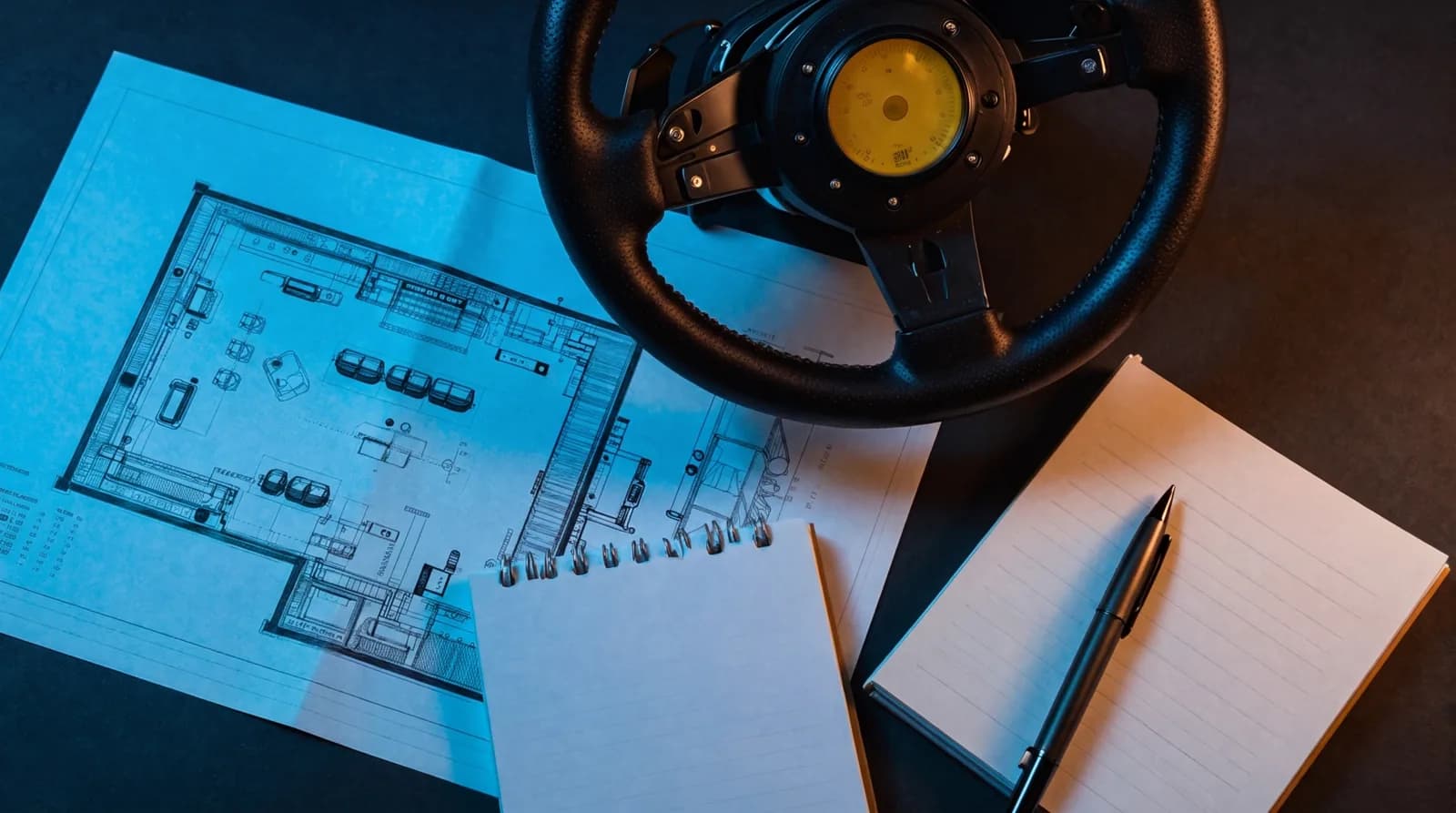
Start with the concept, because it drives everything
Before any spreadsheet, decide what kind of venue you are. The biggest fork is casual experience versus hardcore training. A casual-first lounge sells fun to groups who have never touched a load-cell pedal: birthdays, corporate nights, date nights, walk-in curiosity. A training-first center sells seat time to enthusiasts. You can lean one way and still serve the other, but the lead choice decides your pricing, your marketing, your rig mix, and even your location. Say it in one sentence at the top of the plan, and make every later section agree with it.
My strong bias, and the thing that fills a calendar, is casual-first. The enthusiast with a rig at home exists but does not carry the business. I dig into why in the main guide.
Read the full opening guideThe section-by-section skeleton
A plan a reviewer takes seriously has the same bones as any other, filled with venue-specific answers rather than boilerplate:
- Concept and positioning. The one-sentence identity above, plus who your customer is and why they come back.
- Market and location. Your trade area, the competing entertainment options, and why the specific space works for a room full of simulators. Note the electrical, cooling, and ceiling-height needs a plain retail unit may not have.
- Revenue streams. Sessions as the base, memberships for recurring revenue, parties and corporate events as the high-ticket days, and gift cards. Reviewers like to see more than one line.
- Cost structure. Rent, rigs, staffing, and software, split into one-time buildout and monthly recurring.
- Marketing plan. How the first hundred customers hear about you, since a new category does not fill itself.
The numbers reviewers poke at
A lender or landlord is not looking for a rosy projection. They are looking for assumptions they can defend. The three that matter most for a sim venue: your utilization assumption (how many sessions per rig per day you expect, and why), your session price relative to other local entertainment options, and how the two combine into a believable payback timeline. Do not invent a benchmark. Show your own math, tie it to a real session rate, and be conservative on how full the floor is on an average weekday, not just a busy Saturday.
The mental model that keeps this honest is that a rig is a seat that turns over in short sessions, not a table you sell once a night. I walk through that arithmetic on its own page.
See the cost and revenue mathWhere the software section usually falls apart
Most plans wave a hand at operations with a line like "we will use a booking system." That is where a sharp reviewer, or reality, catches you. A sim venue runs several workflows at once: walk-ins and reservations competing for the same rigs, groups booking multiple seats in one flow, waivers, memberships, and a counter that needs a point of sale. Generic scheduling tools built for a salon buckle under that. Naming how you will actually run the floor, and on what, turns a weak section into a strong one.
How the booking software handles it